


Asian Try Zero-G
Mission: Design Microgravity Experiments

Asian Try Zero-G (ATZG)
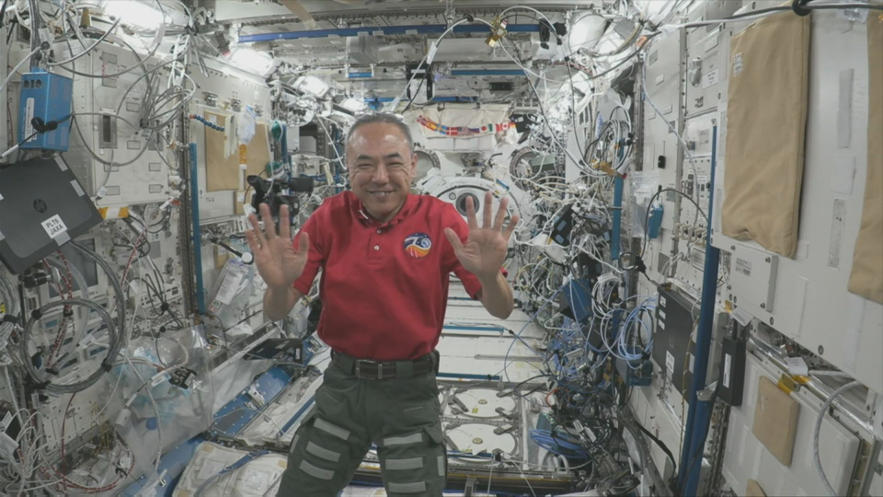
Asian Try Zero-G, created by Japan Aerospace Exploration Agency (JAXA), invites youth and young scientists from the Asia-Pacific to submit creative microgravity experiment proposals. Selected experiments are performed by JAXA astronauts aboard the KIBO module on the International Space Station. Since 2011, over 150 proposals have been submitted from countries e.g. Singapore, Japan, Malaysia, Philippines, Bangladesh, Australia.
Proposal Requirements
1. Simple physics experiments, that can be visible to confirm physical phenomena.
2. Time required to complete the experiment should be less than 10 minutes.
3. Experiment needs to be done with no tools or with items scheduled to be available onboard the International Space Station (ISS). Please refer to the full list of available items onboard the ISS here.
For more information, please refer to the documents below:
Schedule of ATZG 2025
November 24: Open Call for Proposals
January 19: Proposal Deadline (First Round of Selection)
February to March: Final Selection
December 25 to February 26: On-orbit experiment
March 26: Results reporting and award ceremony (TBC)
*Schedule is subjected to change.
Past Proposals from Singapore
MAGNUS GLIDER LOOPING PHASE IN MICROGRAVITY
Explores how a Magnus glider’s looping motion differs in microgravity compared to normal gravity, testing the hypothesis that lower initial conditions are required for looping in space.
ZERO-G SIPHON
Investigates whether blowing air across the top of a vertically placed straw will siphon water from a spherical droplet, utilizing Bernoulli’s principle to understand the resulting pressure differentials and motion of water in microgravity.
DOUBLE PENDULUM
Explores the chaotic behavior of a double pendulum in microgravity, hypothesizing that initial push variations and force application points will significantly influence its motion dynamics.
AIRCRAFT STABILITY
To test the effect of ‘teardrop’ wings, and the effect of changing the neutral point of the aircraft.
GYROSCROPE AND TIPPE TOP
To observe the reaction of the gyroscope when pressing it in one direction, while altering the center of gravity with an additional weight, and to also observe the movement of the Tippe Top.
PAPER BOOMERANG
To observe the trajectories of boomerangs in zero-G.
THE FLYING PAPER PLANE
Throwing paper planes with some variations of aileron, rudder, in ISS/Kibo to observe how they fly in the absence of gravity.